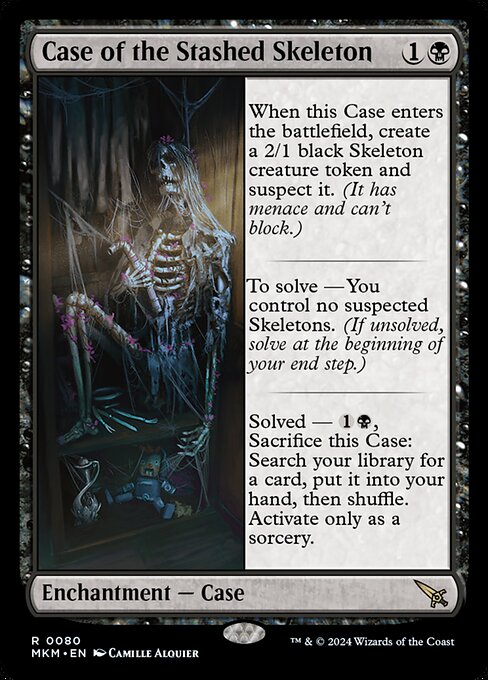
Case of the Stashed Skeleton
Some links are affiliate links — if you buy through them Mauldron may earn a commission, at no extra cost to you. How this works.
Create a free account to add this card to a deck or collection — log in if you have one.
When this Case enters, create a 2/1 black Skeleton creature token and suspect it. (It has menace and can't block.)
To solve — You control no suspected Skeletons. (If unsolved, solve at the beginning of your end step.)
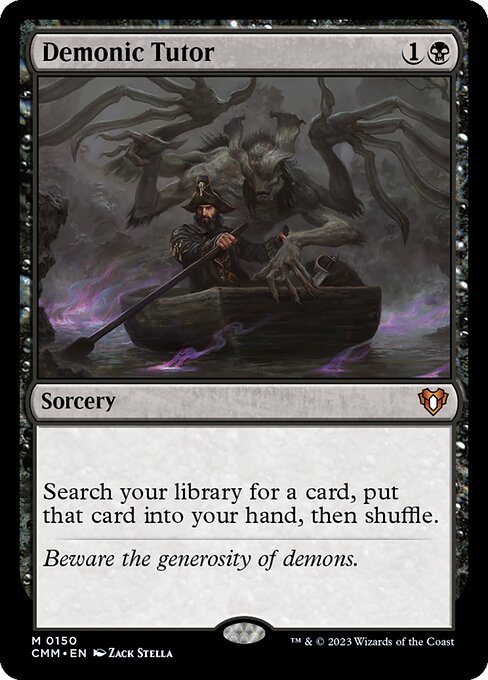
Solved — {1}{B}, Sacrifice this Case: Search your library for a card, put it into your hand, then shuffle. Activate only as a sorcery.
What it does
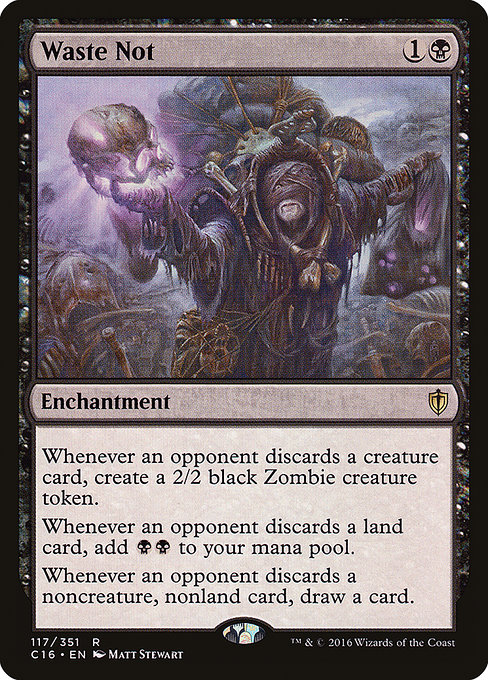
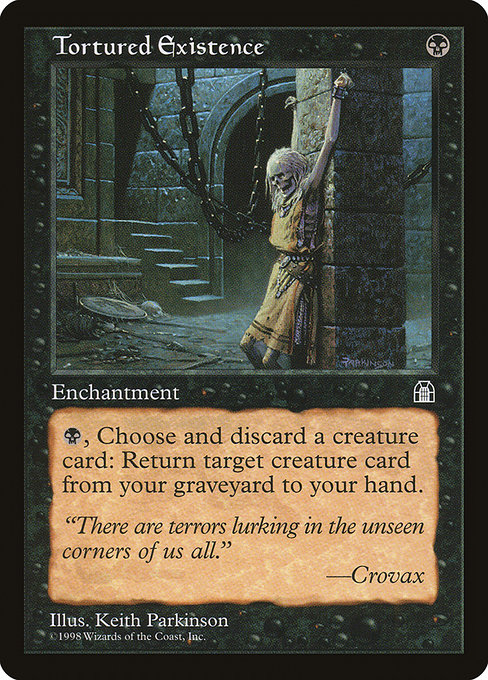
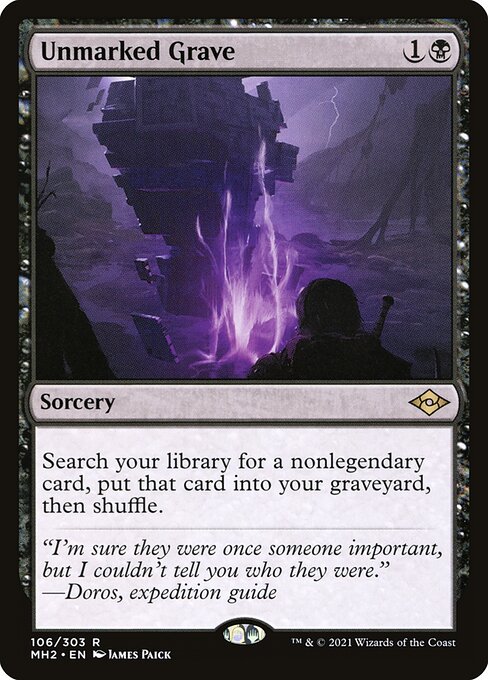
Tagged as Tutor · Tokens — the jobs the deck report counts it toward.
Official rulings
- "To solve" abilities will check for their condition twice: once when the ability would trigger, and once when it resolves. If the condition isn't true at the beginning of your end step, the ability won't trigger at all. If the condition isn't true when the ability resolves, the Case won't become solved. (2024-02-02)
- "Solved — [Triggered ability]" means "[Triggered ability]. This ability triggers only if this Case is solved." Triggered abilities use the word "when," "whenever," or "at." They're often written as "[Trigger condition], [effect]." (2024-02-02)
- "Solved — [static ability]" means "As long as this Case is solved, [static ability]." Static abilities are written as statements, such as "Creatures you control get +1/+1" or "Instant and sorcery spells you cast cost {1} less to cast." (2024-02-02)
- When an effect suspects a creature, it becomes suspected. It gains menace and "This creature can't block" for as long as it's suspected. It stays suspected until it leaves the battlefield or another effect causes it to no longer be suspected. (2024-02-02)
- There's no limit to the number of creatures that can be suspected simultaneously. Suspecting a new creature doesn't cause other creatures to stop being suspected. (2024-02-02)
- If a creature is already suspected, suspecting it again won't have any effect. (2024-02-02)
- Each Case has two special keyword abilities: to solve and solved. (2024-02-02)
- The meaning of "solved" differs based on what type of ability follows it. "Solved — [activated ability]" means "[Activated ability]. Activate only if this Case is solved." Activated abilities contain a colon. They're generally written "[Cost]: [Effect]." (2024-02-02)
- Once a Case becomes solved, it stays solved until it leaves the battlefield. (2024-02-02)
- "To Solve — [condition]" means "At the beginning of your end step, if [condition] and this Case is not solved, it becomes solved." (2024-02-02)
- Cases don't lose their other abilities when they become solved. (2024-02-02)
- Being solved is not part of a permanent's copiable values. A permanent that becomes a copy of a solved Case is not solved. A solved Case that somehow becomes a copy of a different Case stays solved. (2024-02-02)
- If a suspected creature loses all abilities, it will lose menace and "This creature can't block", but it won't stop being suspected. (2024-02-02)
- Being suspected isn't a copiable value. If a permanent becomes a copy of a suspected creature, it won't be suspected. (2024-02-02)
Printings & prices
Every set Case of the Stashed Skeleton has been printed in, with the art, the finishes and the market price of each — the headline price above is the cheapest of these.
Cards like this
The most-played cards that do something similar to Case of the Stashed Skeleton, and are playable in its colours.