Treasure, Food & Clue
Zones & actions
The three predefined artifact tokens — and the one whose ability can't be responded to.
How it works
These three tokens are defined once in the rules, so every card that makes one makes exactly the same thing. A Treasure is a colourless artifact with "{T}, Sacrifice this token: Add one mana of any colour." A Food has "{2}, {T}, Sacrifice this token: You gain 3 life." A Clue has "{2}, Sacrifice this token: Draw a card."
They are artifacts for every purpose, which matters more than most players notice: they switch on artifact payoffs, affinity, improvise and metalcraft, and they satisfy "sacrifice an artifact" costs.
The asymmetry worth learning: a Treasure's ability is a MANA ability. It doesn't use the stack and can't be responded to. Food and Clue abilities are ordinary activated abilities, and they can be.
Common confusions
“Can someone respond to me cracking a Treasure?”
No. Producing mana with a Treasure is a mana ability — it never goes on the stack, so there is no window to respond. Cracking a Clue for a card, by contrast, can be responded to.
“My Treasures turned on an artifact card I'd forgotten about.”
Expected. They count as artifacts you control for as long as they're on the battlefield, so a Treasure-heavy deck often qualifies for artifact payoffs by accident.
“Do they feed sacrifice outlets and death triggers?”
Yes — using one is a genuine sacrifice, so anything that cares about you sacrificing a permanent, or about an artifact hitting a graveyard, sees it.
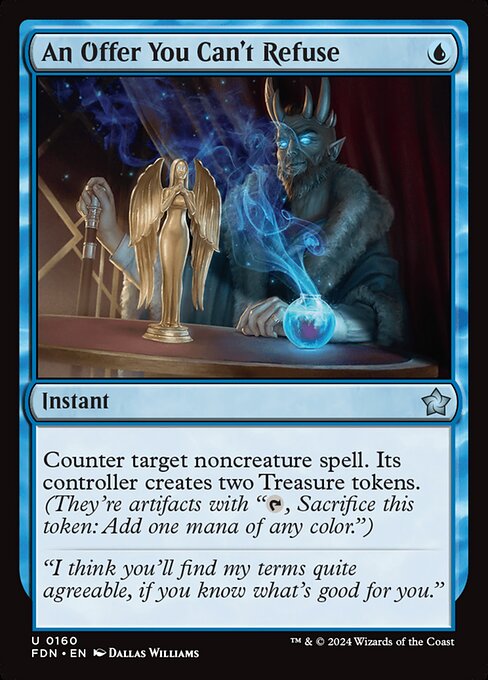
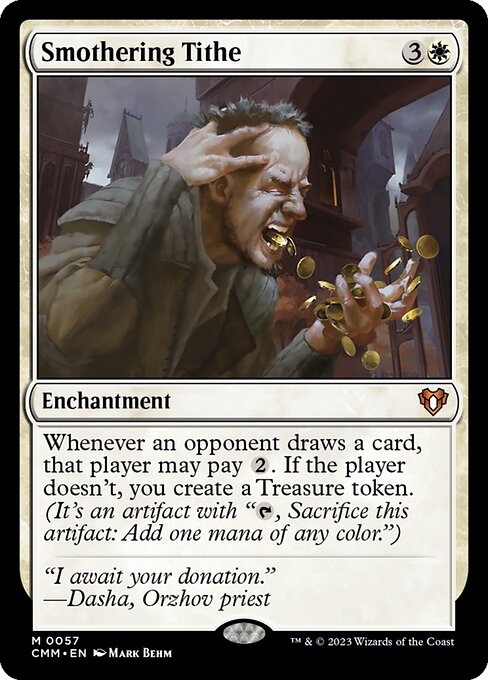
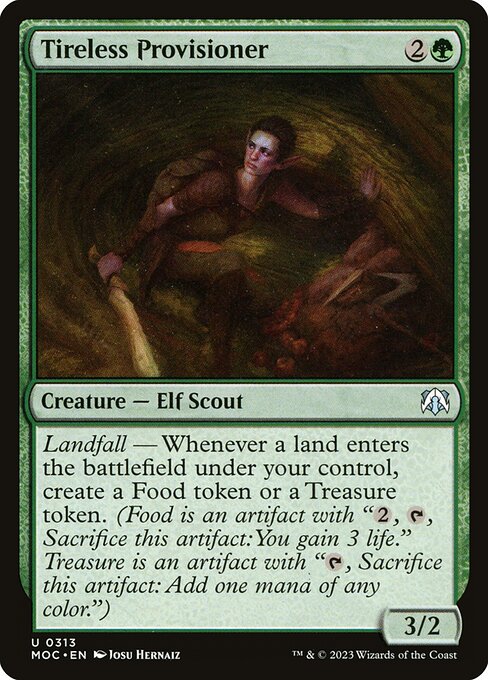
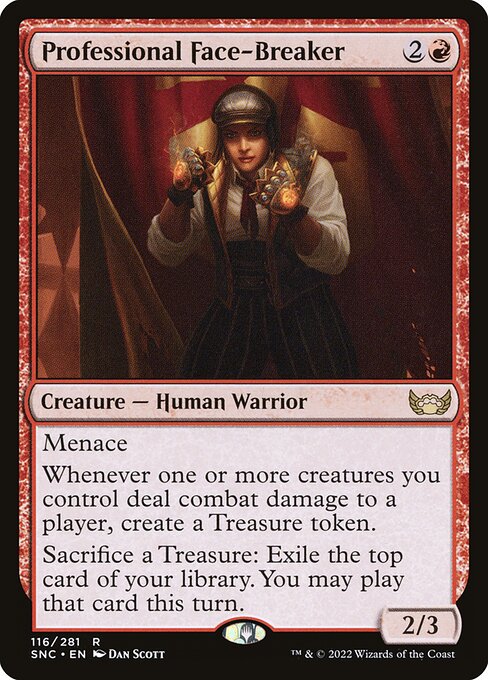
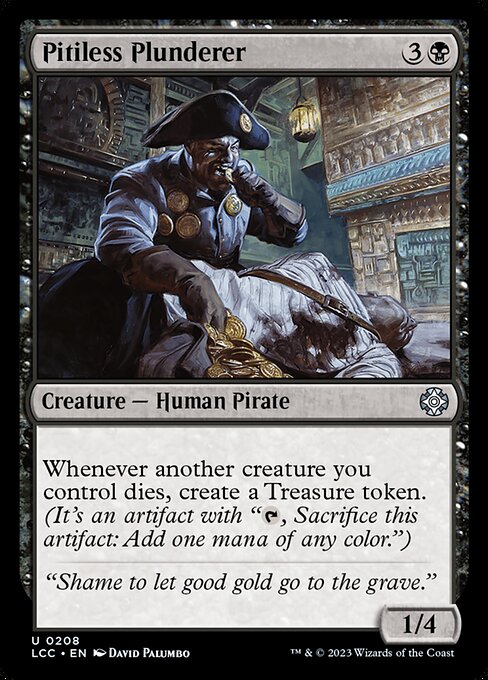
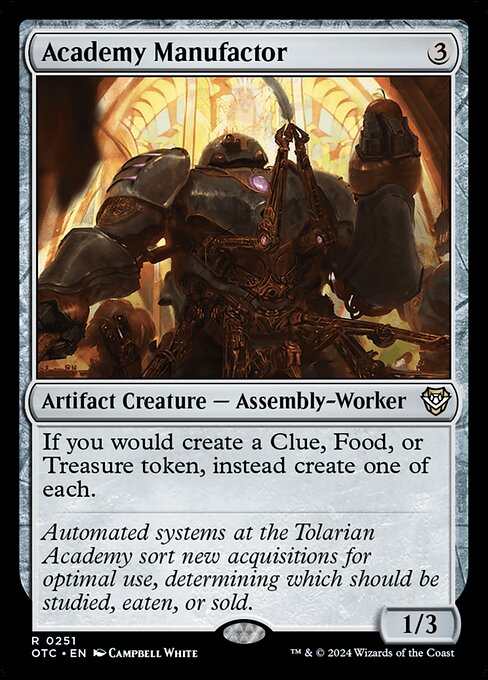
Popular Treasure makers
Ranked by how often Commander decks actually play them.



Build with it — free account
Mauldron reads a Commander decklist back to you: what it's trying to do, where the mana is thin, and which cards to swap. Free, and you can try it without an account.